

Guardianship vs. Trust: What Actually Protects Your Child?
If you’re the parent of a child with special needs, chances are you’ve spent years making decisions to protect their future. From medical care and education to daily support and financial planning, every decision is made with one goal in mind: ensuring your child is cared for, even when you’re no longer able to provide that care yourself.
As you begin researching estate planning, you’ll likely encounter two legal concepts over and over again: guardianship and trusts.
Many families assume they must choose between the two. In reality, guardianship and trusts serve very different purposes, and understanding those differences is often one of the most important steps in creating a plan that truly protects your child.
Quick Answer: A guardian is typically responsible for certain personal, healthcare, or legal decisions. A trust manages financial assets according to the instructions established by the person who created it. Rather than replacing one another, these tools often complement each other in a comprehensive estate plan.
For a broader view of how these documents fit together, visit our Estate Planning page.

Why Families Get Confused About Guardianship and Trusts
If you’ve searched online for answers, you’ve probably noticed something frustrating. One article explains guardianship. Another discusses trusts. A third focuses on Special Needs Trusts. Very few explain how all of these pieces fit together.
As a result, families often leave with more questions than answers: Do we need guardianship? Is a trust enough? Can one replace the other? What happens when our child turns 18?
These are excellent questions, but they often begin with one misunderstanding: the assumption that guardianship and trusts solve the same problem. They don’t.
Guardianship Protects Decisions
Guardianship is generally focused on decision-making. It may involve healthcare, living arrangements, education, personal well-being, or other important legal matters, depending on the person’s needs and the court’s order.
Trusts Protect Financial Resources
A trust answers a different question: how will money or property be managed over time? A trustee follows the trust instructions to manage assets responsibly for the beneficiary.
The Texas Health and Human Services Commission provides information about guardianship and supported decision-making options for Texas families. Texas HHS guardianship information

The Biggest Misconceptions About Guardianship and Trusts
Once families understand the basic difference between a guardian and a trust, another question naturally follows: “Which one do we actually need?”
The answer is rarely as simple as choosing one over the other. One of the biggest misconceptions about guardianship vs. trust is believing they are designed to solve the same problem.
Misconception #1: “A Trust Eliminates the Need for Guardianship.”
A trust is designed to manage assets. It is not designed to make healthcare decisions, determine living arrangements, or provide legal authority over personal matters.
Misconception #2: “If We Have Guardianship, We’ve Protected Everything.”
Guardianship may address decision-making responsibilities, but it does not automatically determine how inherited assets should be managed, invested, or distributed over time.
Key takeaway: Guardianship and trusts protect different parts of a loved one’s future. The strongest plans often coordinate both rather than relying on one document to solve every problem.

Common Planning Mistakes Families Can Avoid
Most planning mistakes are not caused by poor decisions. They are caused by incomplete planning.
Assuming Guardianship Controls Financial Assets
Many families are surprised to learn that a guardian does not automatically manage every inherited asset or trust. Financial planning and personal decision-making often involve different responsibilities.
Forgetting Beneficiary Designations
A thoughtfully prepared estate plan can still produce unintended results if retirement accounts, life insurance policies, or investment accounts have not been reviewed.
Waiting Until a Crisis
Estate planning is often easiest when decisions are made thoughtfully rather than urgently. Beginning the conversation before a major life transition allows families to explore options without unnecessary pressure.
The Social Security Administration explains that SSI is based on income and resource limits, which is one reason families often coordinate trusts carefully when planning for a loved one with disabilities. Social Security Administration SSI information

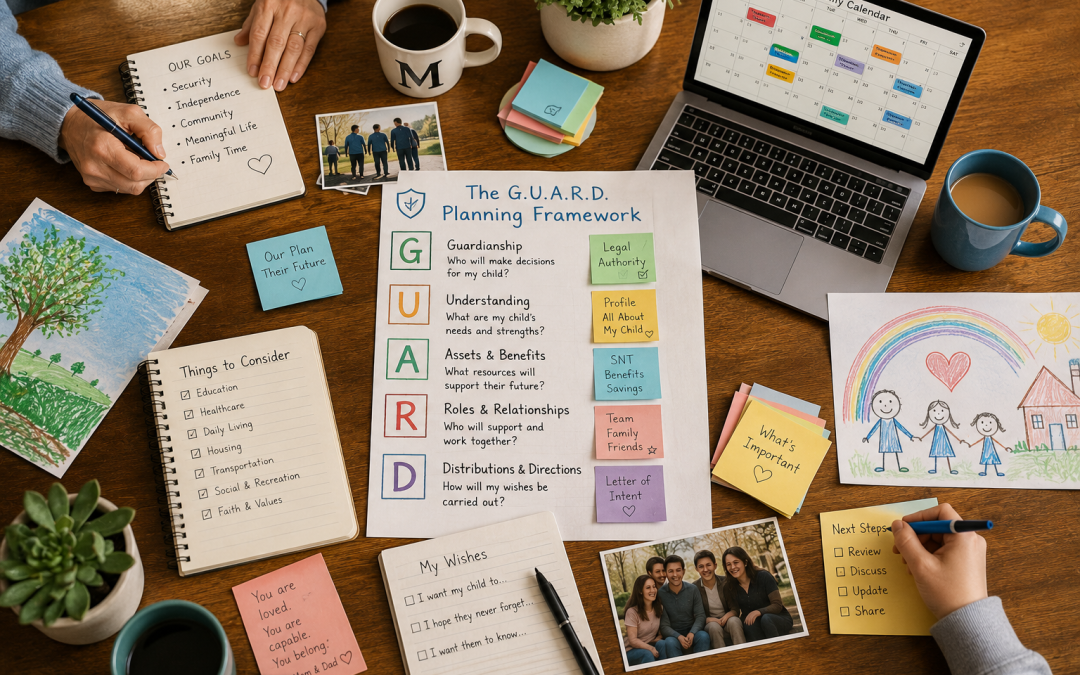
The G.U.A.R.D. Planning Framework
Once families understand that guardianship and trusts serve different purposes, the next question is usually: “What should we do first?”
The answer is not to start with paperwork. It is to start with your child.
The G.U.A.R.D. Framework
- G — Get Clear on Your Child’s Needs: Consider healthcare decisions, financial support, independence, benefits, and trusted helpers.
- U — Understand Which Tool Solves Which Problem: Guardianship, trusts, wills, beneficiary designations, and powers of attorney each serve a different purpose.
- A — Align Every Part of Your Estate Plan: Your will, trust, beneficiary designations, healthcare directives, and guardianship planning should support the same long-term vision.
- R — Review as Life Changes: Revisit your plan as your child approaches adulthood, health needs change, finances shift, or caregivers change.
- D — Discuss Your Plan With the People Who Matter Most: Talk with grandparents, adult siblings, trustees, future guardians, caregivers, and financial professionals.
If you are learning about the financial side of planning, our Wills & Trusts page explains how trusts may fit into a broader estate plan.

Why Coordination Creates Confidence
One of the biggest shifts we see in families happens when they stop asking, “Which document do we need?” and begin asking, “How can every part of our plan work together?”
That is when estate planning becomes less overwhelming. Instead of focusing on isolated legal tools, families begin building a strategy centered on their child’s long-term well-being.
At a Glance: Guardianship generally focuses on decisions. Trusts generally focus on financial resources. Wills, beneficiary designations, powers of attorney, healthcare directives, and letters of intent help complete the larger picture.
The strongest plans are not necessarily the most complicated. They are the most coordinated.

What Successful Planning Really Looks Like
By now, you’ve seen that the question is not simply guardianship vs. trust. It is about understanding how each planning tool contributes to your child’s long-term well-being.
A well-coordinated estate plan helps protect your child’s quality of life, the financial resources you’ve worked hard to build, the people who will help care for your child, family relationships, and your wishes for the future.
Without a Coordinated Plan
Parents may assume that naming a guardian answers every important question. Years later, their adult child receives financial assets directly because beneficiary designations were never updated, while the guardian is unsure who should manage those funds.
With a Coordinated Plan
Another family reviews its estate plan regularly, coordinates guardianship planning with trusts and beneficiary designations, and discusses future roles with relatives. The guardian understands their responsibilities. The trustee understands how financial resources should be managed. Caregivers have direction.

What Families Tell Us Matters Most
Parents rarely say they are trying to create the “perfect” estate plan. Instead, they usually say something much simpler.
They want to know their child will continue to be safe. They want trusted people making thoughtful decisions. They want financial resources managed responsibly. Most of all, they want confidence that the values they have lived by will continue guiding their child’s future.
Remember: Estate planning is never just about legal documents. It is about protecting relationships, supporting independence, creating stability, and leaving behind confidence instead of uncertainty.

Frequently Asked Questions About Guardianship vs. Trust
What is the difference between guardianship and a trust?
A guardian is generally responsible for certain personal, legal, or healthcare decisions when appropriate, while a trust manages financial assets according to the instructions established by the person who created it. They address different needs and often work together within a comprehensive estate plan.
Can a trust replace guardianship?
Not necessarily. A trust is designed to manage financial resources. It generally does not provide authority to make healthcare or personal decisions for another person.
Does a guardian automatically control a trust?
No. The responsibilities of a guardian and a trustee are often separate. Depending on the estate plan, different individuals may serve in each role.
Do most families need both guardianship and a trust?
Every family is different. Some families may benefit from one planning tool, while others may benefit from both. The appropriate approach depends on your child’s needs, financial circumstances, and overall estate planning goals.
What happens when my child turns 18?
For many families, turning 18 marks an important planning milestone. It may be an appropriate time to review guardianship, supported decision-making options, financial planning, and other legal documents that reflect your child’s circumstances.
Does guardianship affect SSI or Medicaid benefits?
Guardianship itself generally serves a different purpose than financial planning. However, because every family’s circumstances are unique, it is important to understand how your overall estate plan, including financial resources, works alongside government benefit programs.
Can grandparents include my child in their estate plan?
Yes. Many grandparents want to provide financial support for a grandchild with special needs. Coordinating those plans with your family’s broader estate planning strategy can help ensure everyone is working toward the same long-term goals.
Who manages a trust?
The person responsible for managing the trust is known as the trustee. The trustee follows the instructions outlined in the trust document and manages the assets for the benefit of the beneficiary.
When should families begin planning?
Earlier than most people think. Beginning the conversation well before major life transitions often provides greater flexibility and allows families to make thoughtful decisions without unnecessary pressure.
What’s the most important takeaway when comparing guardianship vs. trust?
The goal is not deciding which one is better. The goal is understanding how each planning tool supports a different aspect of your child’s future. When every part of your estate plan works together, your family gains greater clarity, confidence, and peace of mind.
Protecting Your Child Means Looking at the Bigger Picture
When comparing guardianship vs. trust, it is easy to focus on legal definitions. The more important question is this: how can every part of your estate plan work together to protect your child throughout every stage of life?
Guardianship, trusts, beneficiary designations, wills, and other estate planning tools each have a unique role to play. When they are coordinated thoughtfully, they create a stronger foundation for your child’s future and help reduce uncertainty for the people who will carry out your wishes.
You do not have to navigate these decisions on your own. Understanding your options today can help you make informed decisions that continue protecting your child for years to come.
Ready to Build a Coordinated Plan?
Every child has unique needs, and every family deserves an estate plan that reflects those needs with care and clarity. If you are wondering how guardianship, trusts, and other estate planning tools fit together, De Ford Law Firm can help you move forward with confidence.
Schedule a Confidential Conversation