
Probate & Guardianship Services
Guardianship in Texas
Guardianship may be necessary when a child or incapacitated adult requires legal protection and support for important personal or financial decisions.
DeFord Law Firm helps families navigate the Texas guardianship process with clarity—guiding you through court requirements, legal responsibilities, and the decisions that shape what comes next.

What Guardianship Means in Texas
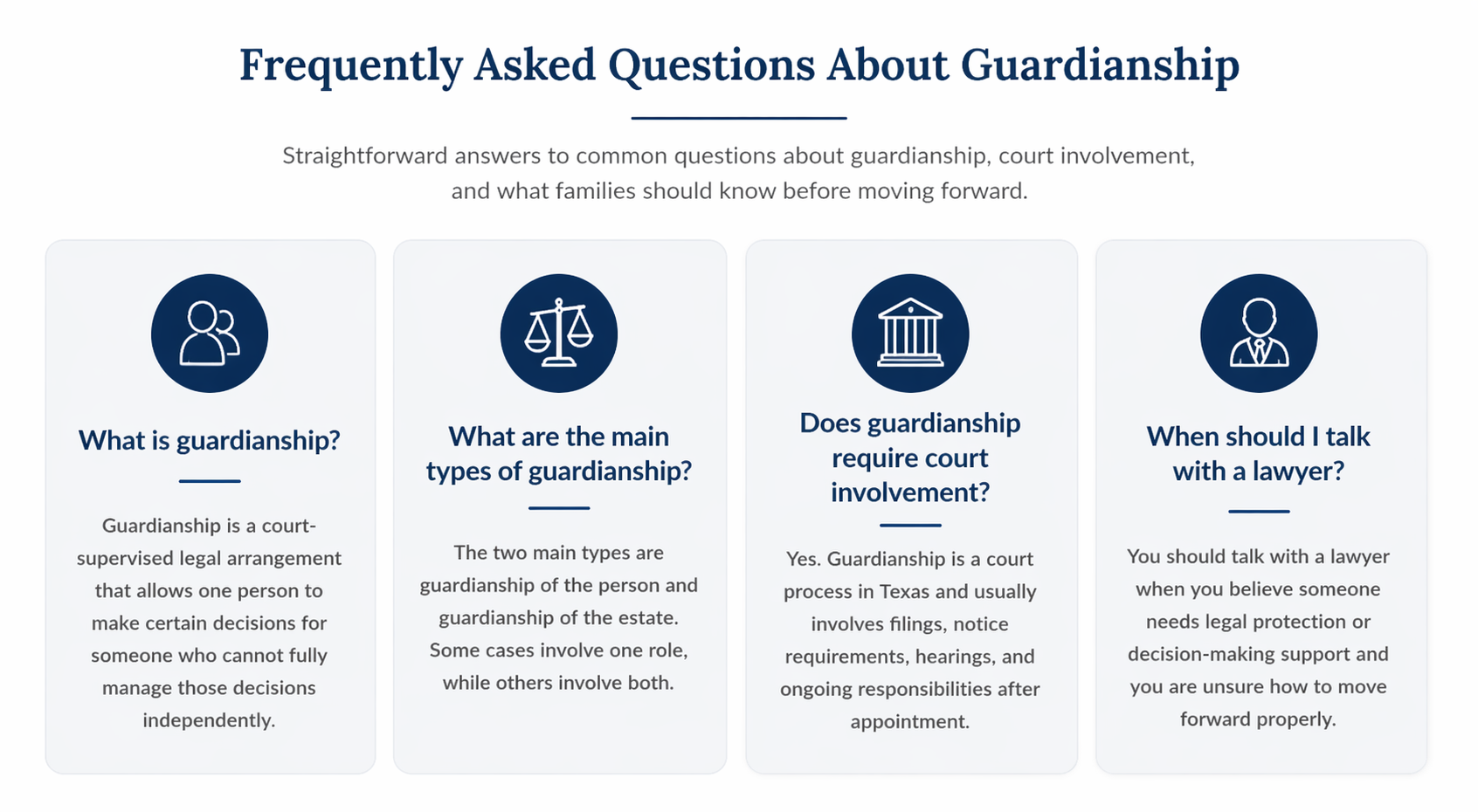
Guardianship is a legal process that allows a court to appoint someone to make decisions for a person who cannot fully manage their personal or financial affairs. This may involve a minor in certain situations or an adult with physical, cognitive, or medical limitations.
Because guardianship affects fundamental rights, Texas courts require formal filings, supporting evidence, and judicial oversight before granting authority. Families often need clear guidance to understand what the court expects and how to move forward appropriately.
- May involve medical, personal, and day-to-day decision-making
- Can include financial management and protection of assets
- Requires court approval and ongoing oversight
- Involves continuing legal responsibilities after appointment
For additional background, review the
Texas Judicial Branch guardianship resources.

Types of Guardianship
In Texas, guardianship generally falls into two primary categories. The appropriate structure depends on the individual’s needs and the scope of decisions involved.
A guardian of the person is responsible for personal care decisions, while a guardian of the estate manages financial matters. In some cases, one individual serves both roles; in others, responsibilities are divided.
- Guardian of the person: oversees health care, living arrangements, and daily welfare
- Guardian of the estate: manages income, property, and financial obligations
- Limited vs. full guardianship: authority may be tailored to the individual’s needs
- Court supervision: ongoing reporting and compliance may be required
Related issues often intersect with
probate proceedings, particularly when financial management is involved.
The Guardianship Process
The process typically begins with filing a petition in probate court. From there, the court may require notice to interested parties, medical or professional evaluations, documentation, and formal hearings.
Because each step must meet specific legal standards, the process can become complex—especially when timing, family dynamics, or medical issues are involved.
- Prepare and file the guardianship application
- Provide notice to required parties
- Participate in court hearings
- Complete required documentation and compliance steps
You can review official procedures through the
Texas Estates Code.

When to Talk with a Guardianship Attorney
You should consider speaking with an attorney when someone can no longer safely manage important decisions, or when you are unsure whether guardianship is necessary.
Early guidance can help you evaluate your options, avoid delays, and move through the court process with greater confidence and structure.
Additional guidance is available through
Texas Health and Human Services.
Guidance When Guardianship Decisions Cannot Wait
If your family is facing a guardianship issue, DeFord Law Firm can help you understand the process and move forward with clearer direction.