

Myth vs. Reality: Unmarried Couples in The Woodlands, Texas

The Common Law Marriage Myth
Many couples in The Woodlands build deeply connected lives together long before they ever think about legal definitions. They share homes, finances, children, routines, future plans, and the quiet responsibility of protecting one another through life’s uncertainties.
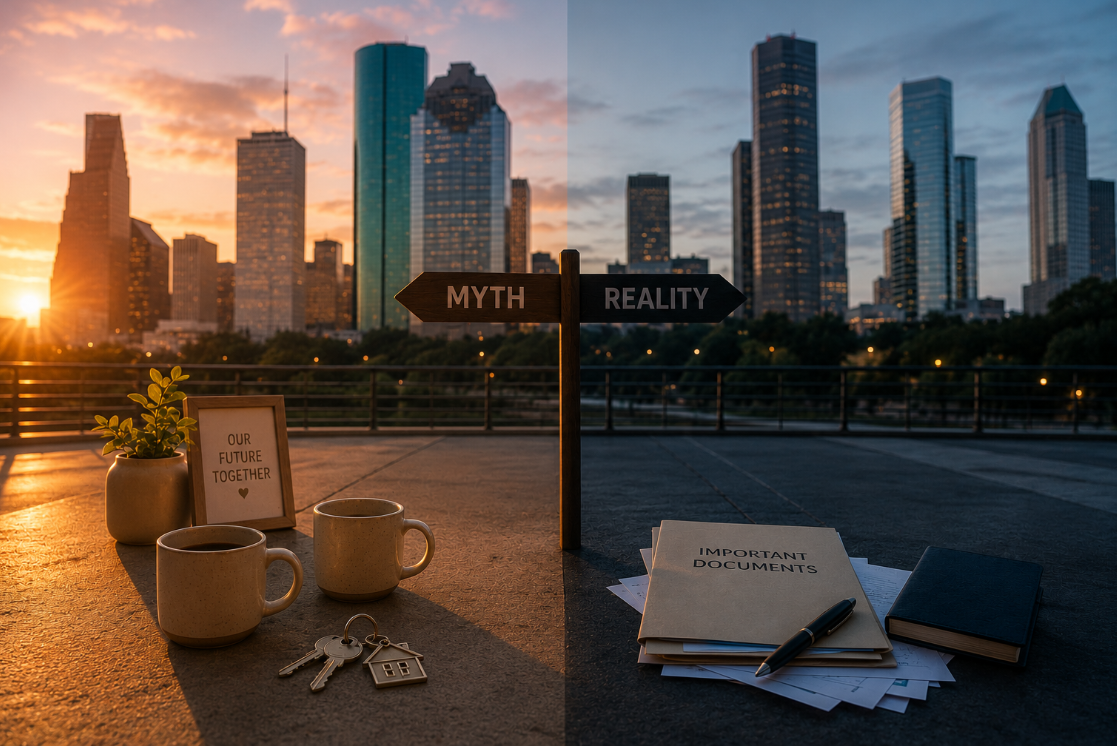
The Myth
“If we’ve lived together for years, Texas automatically considers us married.”
The Reality
Not necessarily. Texas recognizes common law marriage, but simply living together does not automatically create legal rights or protections.
That distinction matters because emotional commitment and legal protection are not always the same thing.
At DeFord Law Firm, we believe planning should feel less like navigating a legal maze and more like creating a calm, thoughtful roadmap for the people you love most.
What Texas Actually Requires
In Texas, a common law marriage generally requires all three of the following:
- An agreement to be married
- Living together as spouses in Texas
- Representing yourselves publicly as married
Using the same last name, introducing each other as spouses, or filing taxes jointly can sometimes become evidence in a common law marriage dispute.
The Texas State Law Library explains that simply living together is usually not enough by itself to establish a common law marriage under Texas law.

The Risks Most Couples Overlook
Many unmarried couples assume they automatically have rights involving property ownership, inheritance, medical decisions, financial accounts, and breakup protections.
The difficult part is that many couples do not realize these gaps exist until a medical emergency, unexpected loss, or major life transition forces important decisions to happen quickly.
For many families, these conversations are not really about legal documents alone. They are about reducing uncertainty, protecting the people you love, and creating peace of mind during moments that can otherwise feel overwhelming.
The Texas Comptroller explains that Texas inheritance laws determine who receives property when someone dies without a valid will.

What Happens During Separation
If a Texas court determines a common law marriage existed, the breakup may legally function much like a divorce.
- Property division
- Retirement accounts
- Business ownership
- Debt responsibility
- Real estate interests
For couples with heavily intertwined finances, these disputes can become financially significant very quickly.
Planning ahead helps reduce confusion before emotions, money, and family expectations become tangled together.

How Couples Protect Themselves
Many couples simply want the comfort of knowing the person they love will be protected if life suddenly changes.
That kind of clarity often comes from planning proactively instead of relying on assumptions.
- Cohabitation agreements
- Wills and estate planning documents
- Powers of attorney
- Property ownership agreements
- Beneficiary updates
These tools can help reduce uncertainty, support calmer decision-making, and create legal clarity if life changes unexpectedly.
Frequently Asked Questions
Does living together automatically create a common law marriage in Texas?
No. Texas requires more than cohabitation alone. Couples generally must agree to be married, live together as spouses, and represent themselves publicly as married.
Do unmarried partners automatically inherit property in Texas?
Usually no. Without proper estate planning, unmarried partners generally do not automatically inherit under Texas intestacy laws.
Can a common law spouse claim community property rights?
Yes. If a court determines a valid common law marriage existed, Texas community property laws may apply.
Can unmarried partners make medical decisions for each other?
Not automatically. Proper powers of attorney and healthcare directives are usually needed.
How can unmarried couples in The Woodlands protect themselves legally?
Many couples use wills, cohabitation agreements, beneficiary updates, and estate planning documents to create legal clarity and protection.

Conclusion
For many unmarried couples in The Woodlands, the greatest challenge is not a lack of commitment — it is the uncertainty that can happen when important legal protections have never been clearly defined.
People often believe love, time together, or shared finances automatically create legal protection. Sometimes they do. Sometimes they do not.
Understanding how Texas law treats unmarried couples allows you to make intentional decisions now instead of discovering problems too late.
Thoughtful planning is not about expecting the worst. It is about giving the people you care about clarity, stability, and support when they need it most.
Protect the Life You’re Building Together
Thoughtful legal planning can help protect your relationship, your finances, and your future with clarity, calm, and confidence.
Schedule a Consultation
Recent Comments