
TEXAS PROBATE
Muniment of Title in Texas
When a loved one leaves a will, families often want a simpler way to transfer property without full probate.
A Muniment of Title can be an efficient option under Texas law—but only if the estate qualifies. DeFord Law Firm helps you determine whether this streamlined probate path is available and how to move forward with clarity.
Will-based transfer
Texas property guidance

What Is a Muniment of Title?
A Muniment of Title is a simplified probate process in Texas that allows a valid will to be admitted to probate without appointing an executor.
This process is often used when there are no unpaid debts and no need for ongoing estate administration. The court recognizes the will, and the order can then be used to transfer property—especially real estate.
For a broader overview, see:
Understanding the Texas Probate Process
- Will is validated by the court
- No executor administration required
- Commonly used for property transfer


When Can a Muniment of Title Be Used?
A Muniment of Title may be available when the estate is straightforward and meets Texas legal requirements.
- There is a valid will
- No unpaid unsecured debts exist
- No need for full administration
- Assets and beneficiaries are clear
Many families assume they qualify—but missing even one requirement can result in delays or rejection.
What Property Can It Transfer?
A Muniment of Title is most commonly used to transfer real estate, but it may also help with certain other assets depending on the institution.
- Real property (primary use)
- Property title transfers
- Limited financial assets (case-dependent)
It establishes ownership through the will—but does not provide the same authority as full probate administration.

Requirements and Limitations
A Muniment of Title is efficient—but only when the estate truly qualifies.
- No unpaid unsecured debts
- No disputes among beneficiaries
- Not suitable for complex estates
- May not satisfy all institutions
For more on estate roles and obligations, see:
Executors and Probate Responsibilities
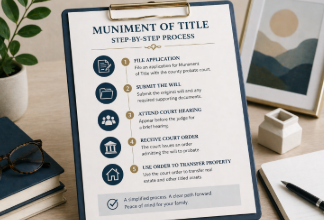
How a Muniment of Title Works
1. File application
Submit the will and request muniment of title probate.
2. Court review
The court reviews and admits the will.
3. Transfer property
Use the order to transfer title to beneficiaries.
Helpful Probate Resources
Explore additional guidance to better understand probate, estate responsibilities, and next steps.
Texas Probate Process
|
Executors & Creditors
|
All Articles
|
Choose the Right Probate Option
A Muniment of Title can save time and cost—but only when used correctly.
Recent Comments