
TEXAS PROBATE
Probate With a Will in Texas
Even when a loved one leaves a will, probate may still be required before the estate can be legally handled.
A will gives direction, but the court process still matters. DeFord Law Firm helps families validate wills, understand executor duties, address estate debts, and move through Texas probate with clarity.
Executor guidance
Texas probate support
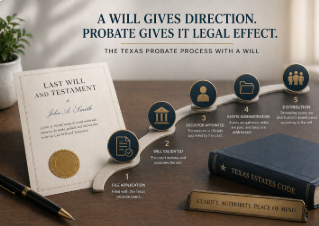
Do You Need Probate If There Is a Will?
In many Texas estates, a will must still be admitted to probate before it can be legally enforced. Probate allows the court to confirm the will, appoint the executor, and authorize estate administration.
This is where many families get surprised. A will gives instructions, but it does not automatically transfer every asset or give someone immediate legal authority to act for the estate.
For a broader overview, read DeFord Law Firm’s article: Do You Need a New Will After Moving to Texas? Myth vs. Reality.
- The original will may need to be filed with the court
- The court may validate the will
- The executor may need formal authority
- Estate debts and assets must be handled properly
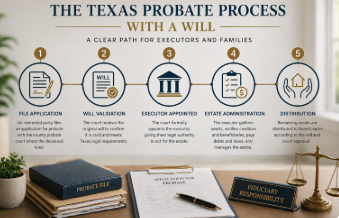

How Probate Works With a Will in Texas
Probate with a will is usually more structured than probate without a will because the deceased person left written instructions. Still, the process must be handled correctly.
The court may review the will, confirm the executor, and issue documents that allow the executor to manage estate business. This can include dealing with banks, real estate, debts, taxes, beneficiaries, and final distributions.
- File the probate application
- Submit the original will
- Attend the required court hearing
- Have the executor appointed
- Identify assets, address debts, and distribute property
For immediate probate help, visit DeFord Law Firm’s Probate in Texas service page.
What Does an Executor Do in Texas Probate?
The executor is the person named in the will to carry out estate responsibilities. Once appointed by the court, the executor may have authority to gather assets, communicate with beneficiaries, pay valid debts, and distribute property according to the will.
Executor responsibilities can feel overwhelming. Mistakes may cause delays, conflict, or personal liability concerns, especially when real estate, creditors, business interests, or family tension are involved.
- File or support the probate application
- Protect estate assets
- Notify required parties
- Address debts and creditor issues
- Distribute property according to the will
If the family is dealing with sudden loss, DeFord’s article What to Do After a Spouse Dies: Clarity After Sudden Loss may also be helpful.

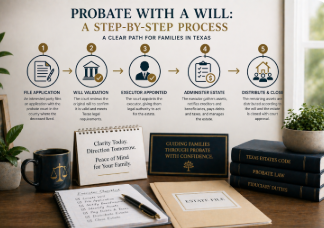
Common Problems Even When There Is a Will
A will helps, but it does not eliminate every probate issue. The estate may still face creditor claims, unclear assets, family disagreements, executor disputes, or questions about whether the will is valid.
These problems are often manageable when addressed early. Waiting too long can make documents harder to locate, deadlines harder to track, and family tensions harder to control.
- Will contests or validity concerns
- Executor disagreements
- Creditor claims and estate debts
- Unclear asset ownership
- Real estate transfer issues
The right legal guidance helps the executor move carefully, document decisions, and protect the estate throughout the process.
Helpful Probate and Estate Planning Articles
These DeFord Law Firm resources provide additional context for families handling probate, reviewing wills, or responding after the death of a loved one.
Do You Need a New Will After Moving to Texas?
Learn why a valid will may still need review to work smoothly under Texas probate law.
What to Do After a Spouse Dies
A practical guide for families facing sudden loss, probate questions, and urgent next steps.
Explore All Articles
Browse DeFord Law Firm’s resource library for related probate, estate planning, and family guidance.
Probate With a Will FAQs
Does a will avoid probate in Texas?
Not usually. A will often needs to be admitted to probate before it can be legally enforced and before the executor has formal authority to act.
How long does probate take with a will in Texas?
The timeline depends on the court, the estate’s complexity, creditor issues, beneficiary cooperation, and whether anyone challenges the will or executor.
What if the original will cannot be found?
Missing original wills can create additional legal issues. The court may require more proof, and the process may become more complicated depending on the facts.
Can probate be avoided if there is a will?
Some assets may pass outside probate through beneficiary designations, trusts, survivorship rights, or other planning tools. A will alone does not automatically avoid probate.
Helpful Texas Probate Resources
Get Clear Guidance Through Probate
Even with a will, probate can involve court steps, executor duties, deadlines, and legal responsibilities. DeFord Law Firm can help you move forward with confidence.